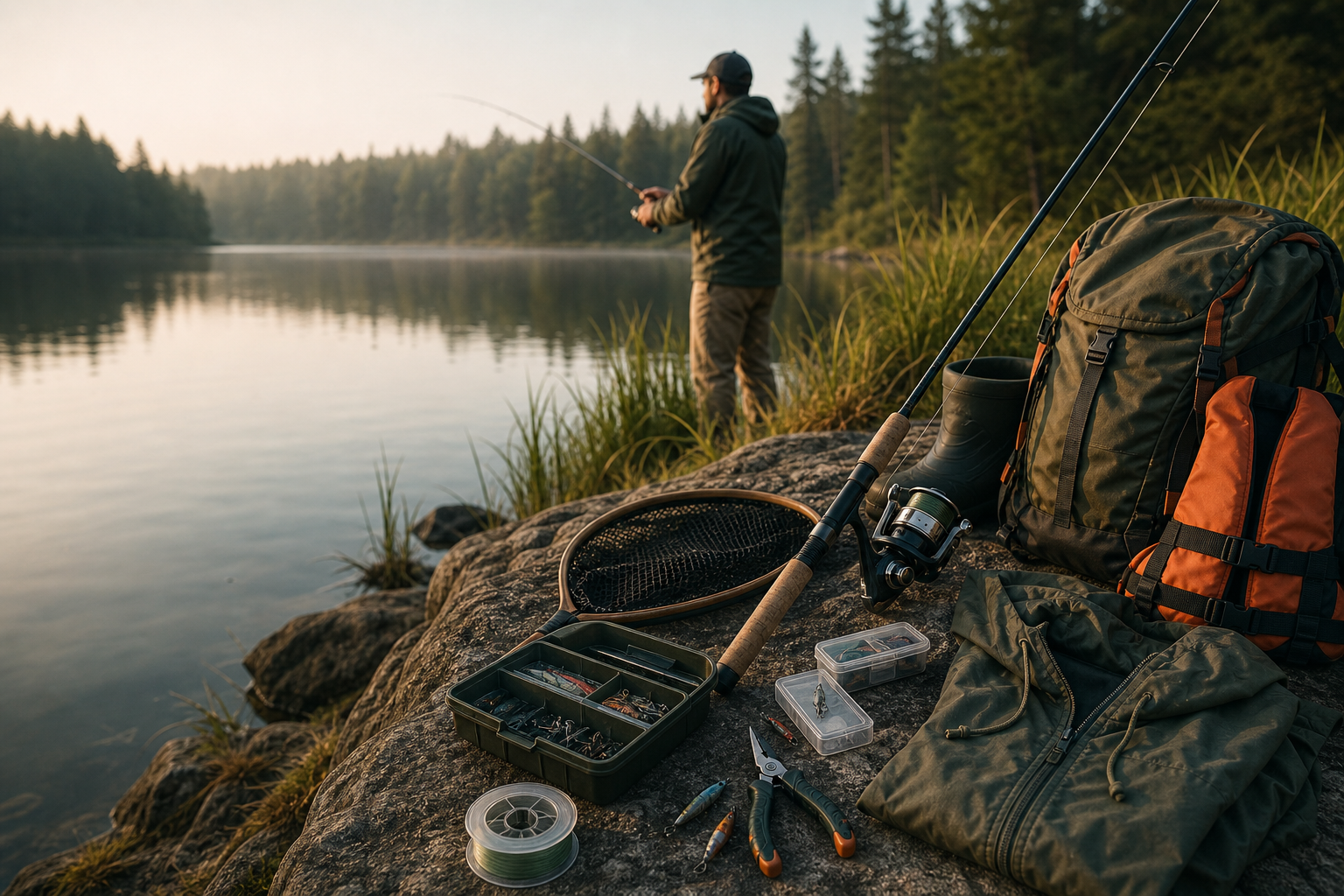
Beginner fishing · Complete setup guide
Setting up a fishing rod is easier when you follow one clear order: assemble the rod, attach the reel, add line, thread the guides, choose a simple rig, tie a dependable knot and set the drag.
The short answer
To set up a fishing rod, connect the rod sections without forcing them, secure the reel in the reel seat, spool the reel with suitable line, pass the line through every guide from bottom to tip, and attach a hook, lure or beginner rig with a reliable knot. Finish by setting the reel’s drag so line can leave the spool under firm pressure. The exact terminal setup depends on whether you are float fishing, lure fishing or fishing near the bottom.
What you need to set up a fishing rod
You do not need a tackle box full of specialist equipment for your first setup. A balanced rod and reel, suitable line and one simple terminal rig are enough. Start with the fishing method you are most likely to use instead of buying parts for every possible situation.
Before buying or fishing, check the official rules for the specific water. Licence requirements, legal hook types, bait restrictions, closed seasons and catch rules differ between countries and sometimes between neighbouring waters.
Know the basic parts before you begin
A fishing rod has a handle, reel seat, blank and a line of guides ending at the tip guide. The reel seat holds the reel foot. The guides control the line and spread pressure along the rod when a fish pulls.
A spinning reel has a spool, bail arm, handle and drag adjustment. The spool stores line. The bail opens to release line during a cast and closes when you begin retrieving. The drag allows line to leave the spool before the line or rod is overloaded. On most beginner spinning reels, the drag knob sits on top of the spool.
Spinning equipment is recommended for most first setups
A spinning reel hangs below the rod and is generally easier to cast than a baitcasting reel. Baitcasting equipment can offer excellent control, but it requires more spool management and is not necessary for learning the fundamentals.
How to set up a fishing rod in eight steps
Assemble the rod sections
Lay the sections on a clean surface. Insert each joint straight and turn gently until it feels secure. Align every guide so they form one straight line. Do not force a joint or push sections together using the fragile guide rings. A rod that is misaligned can twist under load and will not cast cleanly.
Attach the spinning reel
Loosen the reel-seat hood, place the reel foot flat inside the seat and tighten until the reel cannot move. It should be secure, not crushed into place. Hold the rod normally and confirm the reel hangs below it. If the handle is on the uncomfortable side, many spinning reels allow you to unscrew and move the handle to the other side.
Choose a sensible line
Read the line recommendations printed on the rod and spool. For general beginner freshwater fishing, a manageable monofilament line is often the simplest choice because it knots easily, stretches under sudden pressure and is affordable. The correct breaking strain depends on the fish, cover and rig—not merely on catching the largest possible fish.
Braid is thinner and more sensitive at a comparable strength, but it is visible, has almost no stretch and may slip on a bare spool. If you use braid, add suitable backing or follow the reel manufacturer’s instructions and attach a mono or fluorocarbon leader when the situation calls for it.
Spool the reel correctly
Open the bail arm. Secure the line to the spool with an arbor knot or another manufacturer-approved spool knot, trim the tag end and close the bail by hand. Ask someone to hold the supply spool, or place it so the line comes off smoothly. Wind while maintaining light, even tension with a cloth between your fingers.
Stop before the line reaches the rim. A common target is roughly 1–2 mm below the spool lip, although the reel’s instructions take priority. Too little line reduces casting distance. Too much line can spring from the spool and form tangles.
Thread every guide
Open the bail again so line can leave the reel freely. Starting with the large guide nearest the reel, pass the line through each guide in order until it exits the tip. Missing one guide changes how the rod bends and can cause poor casting or damage. Confirm the line has not wrapped around the blank or tip.
Add a leader or swivel only when useful
A leader is a separate final length of line chosen for lower visibility, abrasion resistance, shock absorption or protection from teeth. It is useful in many situations, but it is not automatically required with every monofilament setup. A small swivel can connect parts of some rigs and reduce line twist, but adding oversized hardware makes a presentation clumsy.
Connect line to line with a suitable joining knot, or connect the main line to a swivel with a reliable terminal knot. Wet knots before tightening and pull them down slowly so the coils seat neatly.
Tie on the hook, lure or rig
For many beginner setups, an improved clinch knot or Palomar knot is dependable when matched to the line and eye of the tackle. Follow the knot steps carefully, moisten the knot, tighten it completely and trim the tag end without cutting into the knot. Never test a hook knot with your fingers near the hook point; use pliers or grip the safe parts of the tackle.
Set the drag and perform a final check
Close the bail. Pull line from the reel with steady pressure. The drag should release line smoothly before the setup feels overloaded. It should not be locked solid, and it should not slip during normal retrieval. A practical starting point is well below the line’s breaking strain; anglers commonly fine-tune the drag while fishing based on the line, knots, rod action and fish.
Check the reel seat, guide alignment, line path and knot one final time. Keep the hook secured in a proper hook keeper—not inside a guide ring—and transport the rod with enough space to protect the tip.
Three simple beginner fishing setups
The rod and reel preparation is the same, but the tackle at the end of the line changes with the method. Begin with one of these uncomplicated systems.
| Setup | Basic order | Good for | What to adjust |
|---|---|---|---|
| Float or bobber rig | Float → optional split shot → hook | Presenting bait at a visible, controlled depth | Set the depth and weight so the float remains sensitive and stable |
| Simple lure setup | Main line → optional leader → lure | Covering water with spinners, small hard lures or soft plastics | Match lure weight to the rod’s casting range and use a leader where appropriate |
| Basic bottom rig | Weight or feeder arrangement → swivel/leader where required → hook | Presenting bait near the bottom | Use only enough weight to hold position and ensure the rig is legal and tangle-resistant |
These descriptions are principles, not universal legal rigs. Some waters restrict lead weights, live bait, multiple hooks or particular rig designs. Use the official local rules as the final authority.
What rod and reel should a beginner use?
For broad general use, a medium-light or medium spinning rod with a matching spinning reel is a forgiving place to start. The best length and power depend on where you fish, how much room you have to cast, the lure or rig weight and the fish you expect.
Shorter spinning setup
A shorter rod is easy to control around trees, docks or confined banks. It can also feel more manageable for young or smaller anglers. The trade-off is less leverage and, in many cases, shorter casting potential.
General-purpose spinning setup
A medium-length spinning rod covers many freshwater situations and is usually the most versatile first purchase. Match the reel and line to the specifications printed on the blank rather than choosing each item independently.
Longer or heavier setup
Longer rods can improve reach and line control. Heavier power is useful for larger lures, stronger fish or heavy cover, but an unnecessarily heavy setup reduces sensitivity and makes smaller fish less enjoyable. Buy it only when your intended method requires it.
For complete gear explanations and a logical buying order, continue to the RodRookies Setup Guide or compare the complete beginner fishing gear route.
Common fishing rod setup mistakes
- Threading the guides with the bail closed. Opening the bail first lets the line move freely and prevents unnecessary resistance.
- Missing a guide. Recheck the entire rod, especially small guides near the tip.
- Overfilling the spool. Leave the clearance recommended by the reel manufacturer.
- Spooling without tension. Loose line beds can dig in, spring off or tangle.
- Using tackle outside the rod’s rating. Excessive casting weight can overload the rod.
- Leaving the drag fully tightened. A locked drag removes an important safety margin.
- Using an unfinished knot. Wet, seat and test every knot before casting.
- Adding too many clips and swivels. Terminal tackle should solve a purpose, not merely fill space.
- Hooking tackle into a guide ring. This can scratch the ring and later damage line.
Safety, responsible fishing and the first cast
Before casting: look behind and beside you, keep people outside the hook’s path and wear eye protection. Never cast near overhead power lines. Use a personal flotation device where conditions, regulations or your level of experience require one.
Carry pliers or a suitable hook-removal tool. Learn how to support the species you may catch, keep handling time short and avoid placing fish on hot, dry or abrasive surfaces. If a fish must be returned, prepare your tools before lifting it from the water. Never assume catch-and-release rules are the same everywhere.
Your first practice casts are best made in an open area with a legal, safe casting weight or a suitable rig. Start gently. Smooth timing is more useful than force, and it reduces tangles while protecting the rod.
Frequently asked questions
Do I need a swivel on every fishing setup?
No. A swivel is useful when it connects rig components or reduces line twist, but it is unnecessary for many direct-to-lure and simple hook setups. Use the smallest suitable hardware when it serves a clear function.
Should the reel sit above or below the rod?
A spinning reel normally hangs below a spinning rod. A baitcasting reel sits above a baitcasting rod. The rod and reel types must match.
How much line should I put on a spinning reel?
Fill it close to the spool lip without overfilling—often approximately 1–2 mm below the edge. Follow the reel manufacturer’s guidance because spool shapes differ.
Can I use braided line as a beginner?
Yes, but monofilament is often more forgiving. Braid requires careful knots, controlled tension during spooling and frequently a leader or spool backing.
What is the easiest fishing rig for a beginner?
A simple float rig or a correctly weighted single-lure setup is easy to understand. The best choice depends on the water, target fish and local rules.
How tight should the drag be?
Tight enough to control the fish, but loose enough to release line smoothly before the line, knot or rod is overloaded. Start conservatively and adjust with experience.
Your next step
You now know how to set up a fishing rod for beginners. Learn what each item does before buying more equipment, then choose a setup that matches your age, water and fishing method.
Open the Setup Guide See Beginner Gear Explore the Fishing Blog